
Making the Money Last
Saving is the easy half. Spending a portfolio down without running out is a different problem, and the order your returns arrive in matters more than their average.
6 articles · about 53 min in total
Start with The 4% Rule's Own Author Now Says 4.7%. Morningstar Says 3.9%.Accumulating a portfolio is arithmetic. Spending one down is a different discipline, because you no longer control the most important variable, which is the order the returns arrive in.
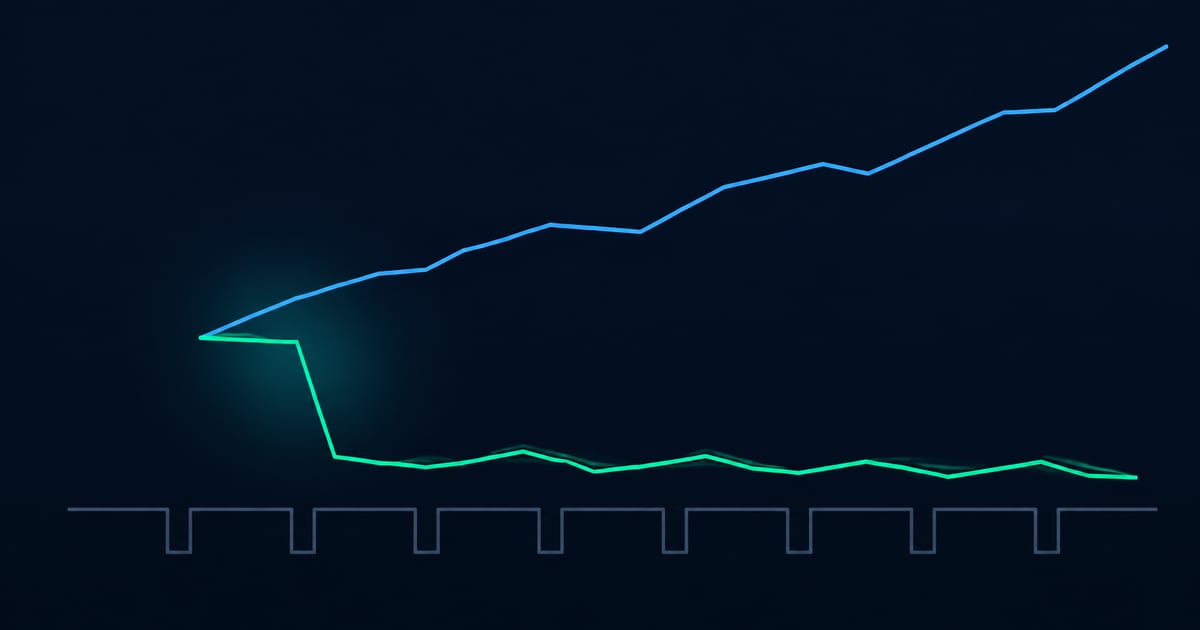
Two portfolios can earn the identical average return over thirty years and end in completely different places. If the bad years land early, while you are withdrawing, you sell more shares to fund the same spending and never fully recover. That is sequence of returns risk, and it is the reason a single average return figure is close to useless in retirement planning.
The 4% rule is the famous shorthand, and it is worth knowing that its own author has since revised the figure upward while Morningstar has published a lower one. They disagree about return assumptions, not about the arithmetic. Treat the number as a starting point that gets adjusted, rather than a rule that gets obeyed.
The last steps here are about the boring instruments that make a drawdown survivable: bonds, cash equivalents, an annuity for the part of the problem insurance is genuinely good at, and enough liability cover that one bad afternoon does not undo the whole plan.
Key takeaways
- Sequence of returns risk means the order in which returns arrive changes the outcome of a withdrawal plan even when the average return is identical.
- The 4% rule is a starting point rather than a rule: its own author has revised it upward to roughly 4.7% while Morningstar has published a figure near 3.9%, and the disagreement is about return assumptions.
- An immediate annuity is worth considering because it pools longevity risk, which is the one risk a portfolio cannot diversify away.
- Bond prices and yields move in opposite directions, so a rate rise lowers the market value of bonds already held.
Step 1: The 4% Rule's Own Author Now Says 4.7%. Morningstar Says 3.9%.
Same question, two credible answers, 0.8 percentage points apart. On a $1 million portfolio that is $8,000 a year of spending. The gap is not a disagreement about facts, it is a disagreement about whether to forecast the future or replay the past, and knowing which you are relying on matters more than the number.
Jul 29, 2026 · 10 min read
Step 2: Sequence of Returns Risk: Why Order Beats Average
Two retirees can earn the identical compound return over thirty years and finish $2.7 million apart. One of them can go broke. Nothing separates them except the order the returns showed up in, and that is a much bigger deal than almost anyone budgets for.
Aug 14, 2026 · 9 min read
Step 3: What Are Bonds, Really, and How Do They Work
A bond is just a loan you make to a government or company, with the terms written down. Here is how the coupon, face value, and maturity fit together, why bond prices move opposite to interest rates, and what role bonds actually play in a regular investor's portfolio.
May 14, 2026 · 8 min read
Step 4: Money Market vs Savings vs T-Bills: Your State Tax Decides
Three places to park cash that all quote roughly the same yield. The thing that actually separates them is your state income tax rate, and almost no comparison article puts a number on it.
Sep 5, 2026 · 9 min read
Step 5: The Case Against Annuities Is About a Different Product From the One Worth Buying
One word covers two things that share almost nothing. A single premium immediate annuity is longevity insurance with no annual fee, and its payout includes a return source you cannot replicate on your own. Variable and indexed annuities are investment products that can run 1.5% to 3.5% all-in. The deserved criticism of the second gets used to dismiss the first.
Jul 29, 2026 · 9 min read
Step 6: The Second Million of Umbrella Coverage Costs a Quarter of the First
A $1 million personal umbrella policy averages $300 to $400 a year. Each additional million runs $75 to $150. That pricing curve tells you what the product is: insurance against something that almost never happens, and the reason your liability is uncapped while your coverage is not.
Jul 29, 2026 · 8 min read





Frequently asked questions
- Is the 4% rule still valid?
- It is a reasonable starting point rather than a rule. William Bengen, who produced the original figure, has since revised it upward to around 4.7% using a broader asset mix, while Morningstar has published a lower figure near 3.9%. Both used the same arithmetic and different assumptions.
- What is sequence of returns risk?
- It is the risk that poor returns arrive early in retirement, while you are withdrawing. Selling shares to fund spending during a decline permanently removes them from the recovery, so two portfolios with the same average return can end very differently.
- Are annuities a bad deal?
- The case against annuities is usually made about a different product from the one worth buying. A simple immediate annuity pools longevity risk across many people, and that pooling is genuinely valuable. Complex variable products with high fees are what the criticism is aimed at.
- Where should retirement cash actually sit?
- Money market funds, high-yield savings and Treasury bills all work, and the deciding factor is usually state tax. Treasury interest is exempt from state income tax, which can make a slightly lower headline yield the better after-tax outcome.